An Interview With Luke Merrill, Thorns In Dark Places

Dark Places

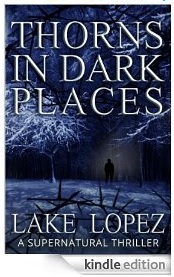
Tonight we welcome the young star of Thorns In Dark Places to The Scary Story. Luke’s had quite an adventure at the Bain Ridge School for Boys. How are you doing these day, kiddo?

Luke Merrill: The physical injuries have healed. The emotional wounds take longer, as you know. All in all, I’m doing well.

Lake: Does that mean you’re ready for a sequel? (Eager, evil smile)

Luke Merrill: After everything you put me through? No. Not a chance. I don’t want anything to do with you – ever.

Lake: All my characters say that. It saddens me. You have to admit, though, you walked away with tons of life experience and some pretty awesome skills.

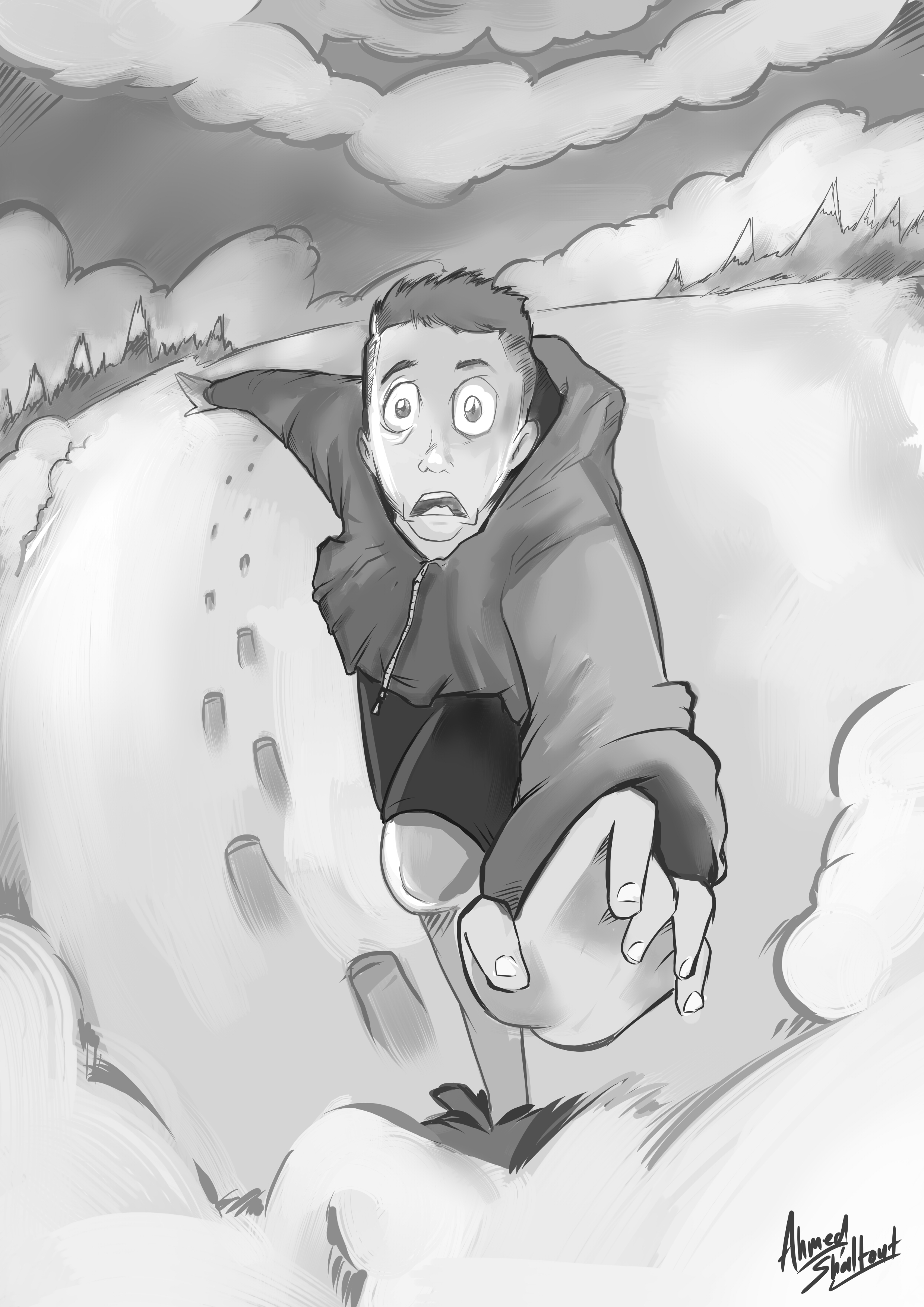
Luke Merrill: Like how to do a decent pull-up? Sneak into the secured wing of a hospital? And charge through snow in subzero weather wearing only basketball shorts?

Lake: Sure, those things. I was thinking about the less tangible concepts though, such as gaining a new awareness of the monsters that find us and what they’re capable of if they worm their way inside. I know a lot of adults who still aren’t aware of that.

Luke Merrill: Yeah, monsters are everywhere, and they want to hurt you.

Lake: It’s one of life’s most important lessons, isn’t it?

Luke Merrill: And saddest.

See why I love this kid? Soon, we’ll spend a little time with a few of his enemies. They’re fairly colorful. I’m sure their insight will prove interesting. LL
Bonnie and Clyde

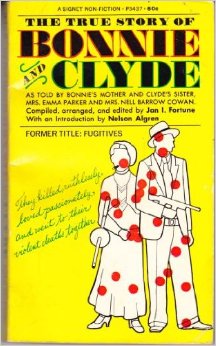
bonnie and clyde the true story ofFew criminals have lodged themselves into American history like Bonnie and Clyde. The names alone conjure images of harrowing getaways, gun battles and, of course, the roadside ambush that sealed their doom. The legends of John Dillinger, Pretty Boy Floyd and others were born of the same era, but those stories are of a different kind of criminal. Bonnie and Clyde were a couple, two young kids in love, and thus their particular tale holds romantic elements that no others can touch.

Legends and lies however are very different branches of the same story-tree.

That said, I was looking forward to the triple-network mini-series (very mini – two episodes) Bonnie & Clyde. I’d heard that the production was factually based. That turned out to be far from the truth. Critics panned the show for its historical inaccuracies. At the same time, some slammed it as a poor representation of the Hollywood version that made Beatty and Dunaway stars, itself a laughable version of true events.

As a writer, especially one that explores and pursues horror, it’s necessary to look into the darkness, glimpse its characters and  attempt to understand why they do the terrible things they do. The movie would’ve been more interesting to me had it examined the desperate hopelessness and circumstances – the darkness – that created these two killers. At the same time, it’s important that a story of this nature acknowledges the impact of sociopathic actions. These kids left grief and mourning wherever they went and, all romantic notions aside, the aftermath of their crimes should be foremost in our minds. This movie version contained none of those elements. It’s fair to say the cast worked hard and did the best they could do with the script they had. The film has moments of beauty and moments of dread. But all in all, it lacks the power of a story well told.

If you’re interested, a good read is, “The True Story of Bonnie and Clyde.” This account was based on interviews with the outlaws’ kin and shares many family conversation. This version gives readers a vicarious idea of what is what like to be hunted, to live in a car, to do wrong and feel badly about it and, most of all, to be afraid of the inevitable end. The book is an emotionally heavy read, like any story about kids who live violently and consequently die too young should be. It’s everything the movie versions Bonnie and Clyde aspired to be and could not achieve.